

Drainage and plumbing, Sunset
Drainage and Plumbing in Sunset, Vancouver
Sunset runs from E 41st Avenue down to the Fraser River, between Ontario Street and Knight Street. There is more combined sewer under these streets than under any other neighbourhood in Vancouver.
The odd part is that the houses on top of it are newer than the city average. We camera the line before anybody quotes a number, and the footage is yours.
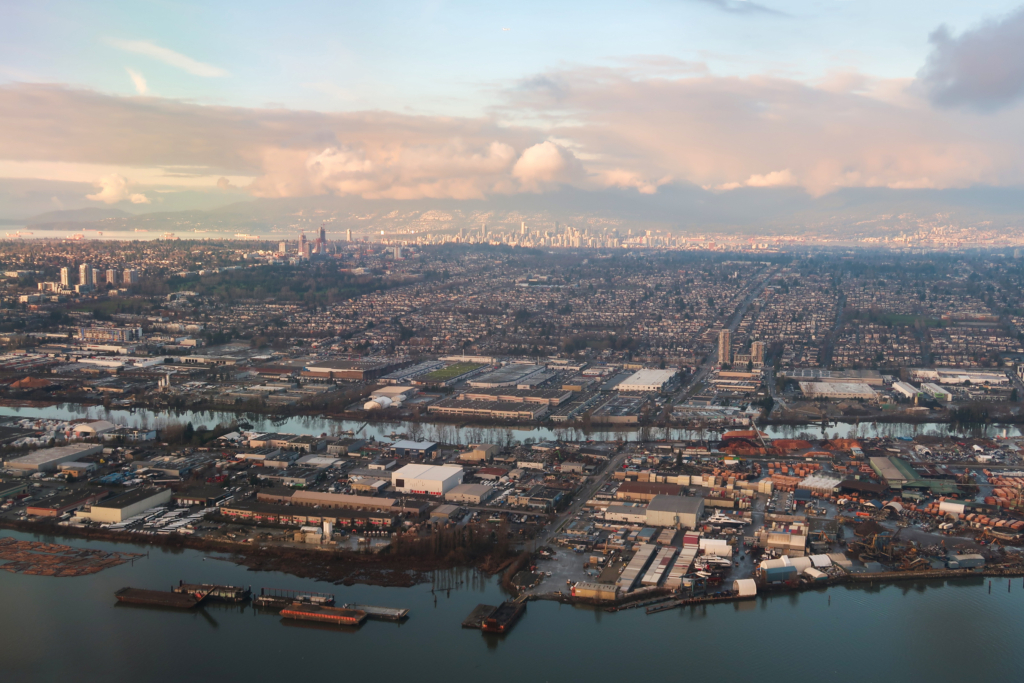
Sunset holds more combined sewer than anywhere else in the city
The City publishes every sewer main it owns. Measured against the real Sunset boundary there are 1,792 segments under these streets, 102.8 kilometres of pipe, and 1,033 of those segments are still combined. That is 67.4 kilometres of one pipe carrying rain and sewage together, the largest amount in any of the 22 Vancouver local areas. Kerrisdale is second at 48.0 kilometres. Sunset holds about a tenth of all the combined sewer left in Vancouver while carrying only about a twentieth of the network.
By share it is first too. 57.6% of Sunset’s main segments are combined against a city average of 24.3%. And 947 of them, 53.6 kilometres, are vitrified clay. Clay cracks at the joint, and Metro Vancouver puts it plainly about roots: they pry open the joints between pipes.
Here is the part nobody expects. Sunset’s housing is newer than the city’s. The median build year on the 6,851 dated parcels here is 1978. The Vancouver median is 1968. 23.3% of Sunset was built in 2000 or later. So a lot of these are newer houses sitting on the oldest style of sewer in the city.
That gap is exactly where the City’s rule bites. The City is working toward the Province’s goal of replacing all combined systems with separated systems by 2050, and as the street gets separated, the properties on it need separated systems too. Sunset rebuilds constantly, and a redevelopment is one of the moments a private connection gets separated. The City has separation work running on 49th Avenue between Cambie and Fraser right now, replacing the old system with one pipe for rainwater and another for sewage.

Flat on top, then it tips over
Sunset is not one piece of ground. From E 41st down to E 47th it is close to level, sitting around 95 to 98 metres. The fall is gentle to E 57th. Then it goes. Between E 59th and E 67th the ground drops about 55 metres in eight blocks, an average grade near 6%. Below E 65th you are under 15 metres above sea level, and at E 67th and E Kent Avenue you are at about 4 metres. Two independent elevation models agree on the shape.
That single fact reorganises the whole drainage conversation. On the plateau the question is where the water sits. On the drop the question is where the water goes and what it hits on the way. On the flats at the bottom the question is whether it can leave at all.
The Province has a standing advisory about this slope. It says the potential area under artesian pressure is where the ground slopes south toward the Fraser in the southern area of Vancouver, and it names Sunset among the artesian areas along with Marpole, Kerrisdale, Dunbar-Southlands, Victoria-Fraserview and Killarney. Its instruction to anyone working here is direct. Assume flowing artesian conditions. Under this ground sits a shallow unconfined aquifer of recent Fraser River sands and gravels, and beneath that the confined Quadra Sands. We do not drill wells. What it means for us is that an excavation quote in Sunset should come from someone who knows what is under the machine.
The buried creek story that runs through so much of Vancouver belongs to the other side of the ridge. The creeks that started up near Mountain View drained north into False Creek. Sunset is the south side, and its water problem is the slope and the Fraser sand, not a lost stream.
24/7 emergency dispatch
Drainage problem in Sunset?
Ryan picks up. Live dispatch, and you get a real arrival window on the call. We camera the line before anybody quotes a number, and you watch the monitor with us.
Sunset drainage and plumbing FAQ
The odds are higher here than anywhere else in Vancouver. 1,033 of the 1,792 City main segments under Sunset are combined, 57.6%, against a city average of 24.3%. In kilometres it is 67.4, the most of any local area. We can tell you what is under your block before we come out.
Because your connection follows the street. The City is working toward the Province’s goal of replacing all combined systems with separated systems by 2050, and its own wording is that as combined sewers get replaced, properties will also need to have separated sewer systems. Getting roof and foundation drains off the sanitary line is usually the practical piece.
You are responsible for maintaining the lines on your property up to where they meet the City’s connection. The City’s own guidance is to call a private plumbing contractor to scope the work, and the contractor pulls the permits and books the inspection.
Not entirely, and this is the quirk of Sunset. The median build year here is 1978 against a city median of 1968, so the houses really are newer. The sewer under the road is not. A newer house on a combined clay street still has an older problem outside the foundation than inside it.
It is, and it is a slope story rather than a soil story. E 41st to E 47th sits around 95 to 98 metres. Between E 59th and E 67th the ground drops about 55 metres in eight blocks, and below E 65th you are under 15 metres above sea level. A lower lot catches what everything above it sheds.
There is, and the warning comes from the Province rather than from us. Its advisory covers the ground sloping south toward the Fraser in the southern area of Vancouver and names Sunset among the artesian areas. Its instruction to contractors working here is to assume flowing artesian conditions. It is a reason to take excavation on this slope seriously, not a reason to expect water in your basement.
Metro Vancouver says it, not just us. Its wording is that roots can pry open the joints between pipes, and the City lists tree roots among the common causes of a sewer backup. Sunset has 9,959 City street trees, 2,203 maples and 2,015 cherries and plums, and 1,056 of them have a trunk over 60 cm. That is a lot of root over a lot of clay.
1,790 Sunset parcels, 26.1%, were built inside the Poly-B window of roughly 1978 to the late 1990s, slightly above the city rate. It is usually grey and stamped PB2110. The important part: Poly-B is a water supply pipe, not a drain pipe, so it has nothing to do with your perimeter drainage.
A number that does not move. You watch the monitor with us, you see the crack or the root or the belly, and the quote comes off what is in the pipe rather than off a guess. The file is yours to keep and it is worth keeping for the next owner.
All of Vancouver, plus Burnaby, New Westminster and the North Shore. South Vancouver, Kensington-Cedar Cottage, Oakridge, Marpole, Riley Park and Victoria Drive are the closest to this one and we are in them constantly.
24/7 EMERGENCY DISPATCH
Water where it should not be?
Ryan picks up. Live dispatch, and you get a real arrival window on the call.