

Drainage and plumbing, Renfrew-Collingwood
Drainage and Plumbing in Renfrew-Collingwood
Which side of Renfrew Street you live on changes the diagnosis. East of it your street already has two pipes. West toward Nanaimo, some blocks still run one pipe carrying sewage and rain together.
That single fact decides whether a wet basement is your perimeter drain or the City main pushing back. We camera the line before anybody quotes a number, and the footage is yours.
Where the last combined sewers are
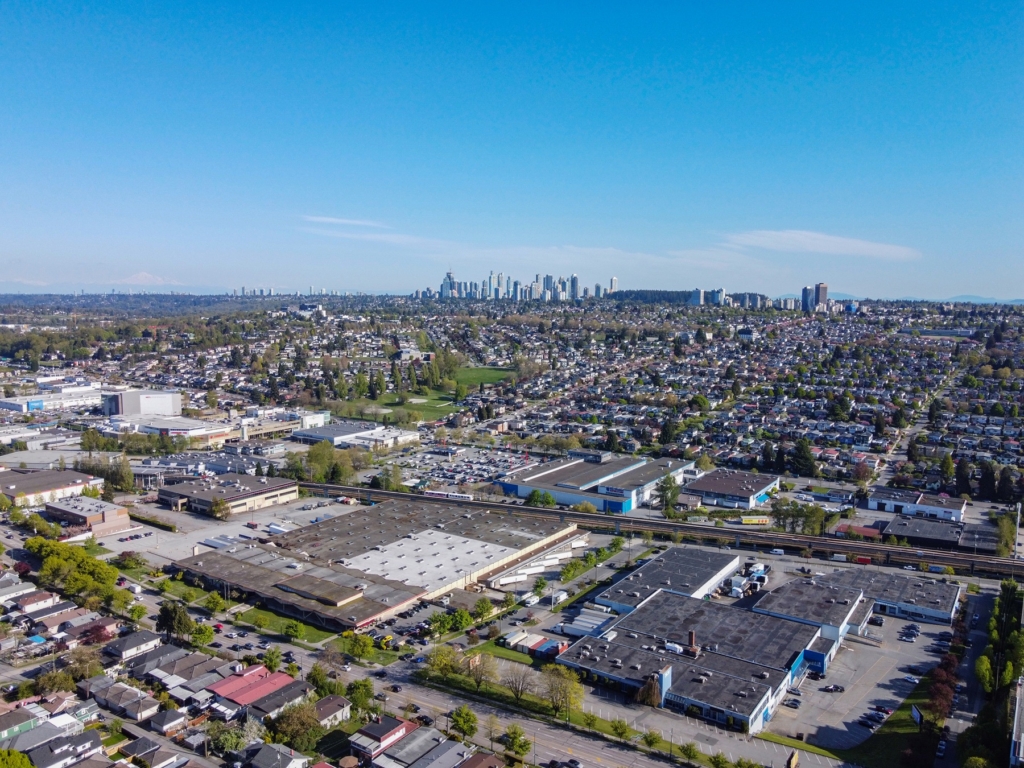
Renfrew-Collingwood runs from Broadway on the north to East 41st on the south, Nanaimo Street on the west and Boundary Road on the east, with Burnaby across the road. Grandview Highway runs through the middle of it and the whole thing sits on rolling hills.
We pulled every sewer main segment whose geometry falls inside the City’s own Renfrew-Collingwood boundary. 3,742 segments. Only 220 of them are combined, 5.9%, against 24.3% for Vancouver as a whole. This neighbourhood is already mostly twinned, which is unusual and it matters more than anything else on this page.
Then we read the coordinates on all 220. Every single one falls between longitude -123.0592 and -123.0459, which is the strip from Nanaimo Street east to roughly Slocan and Earles. 142 of them, 65%, sit at Wales Street or west of it. East of about Renfrew Street the neighbourhood is fully separated.
So in the western strip a hard rain can surcharge one shared main and push back through a floor drain, which is backwater valve and pump territory, and the City has said those properties will need separated systems on their own side as it replaces the mains ahead of the 2050 target. East of Renfrew Street the street already has two pipes, so a wet basement is almost always your own perimeter drain, your own storm lateral, or a roof leader tied into the wrong pipe. The City names that last one directly as a source of inflow.
What is under all of it is clay. 2,460 of the 3,742 segments are vitrified clay, 65.7% overall and 74.3% of the sanitary main. Clay is laid in short lengths with joints, and roots go in at the joint.
Signs worth acting on here
Six calls we take from these streets over and over.
- A floor drain that pushes back during heavy rain. West of Slocan that reads like a combined main surcharging. East of Renfrew Street it reads like your own storm side.
- Slow drains through the whole house. The main, not the fixture. On clay with joints, roots are the usual answer and a camera proves it in minutes.
- The catch basin at your corner holds water. There are 3,718 City catch basins in this neighbourhood, more than in any other. Yard and driveway basins silt up the same way.
- Sewer odour indoors. A dry trap, a cracked lateral or a bad vent. Worth a look before it becomes a backup.
- Roof leaders running into the same pipe as the toilet. The City names improperly connected roof and foundation drains as a source of extra flow into the sanitary line.
- A repeat backup, twice or more. The City runs a preventative cleaning program for select properties that block and back up more often than normal. Worth knowing you are not stuck with it.

Old clay next to a new multiplex on the same lane
On the older single-family streets here, Duchess, Archimedes, Ann, Aberdeen, Price, Gaston, Moss, Spencer, McHardy, Austrey, Foster, Falaise and Horley, we sampled 578 fee-simple lots off the tax roll. 57.3% were built before 1980 and 43.9% went up between 1940 and 1979. That is the Vancouver Special era, on 33 foot and 50 foot lots.
23.2% of those same lots were built in the 1980s or 1990s. Polybutylene reached Canada as early as 1978 and had wide appeal from 1985 to 1997, the resin stopped in 1998, and the Canadian plumbing code dropped it in 2005. So a good share of the eighties and nineties stock here is inside that window. Poly-B is grey or silver flexible supply pipe. It is worth looking at rather than assuming.
And 17.4% of the sample was built in 2000 or later. The Norquay Village Neighbourhood Centre Plan was approved by Council in November 2010 and brought in the RT-11, RM-7 and RM-9 districts, and mid rise and townhouse building has been going in around Joyce-Collingwood Station, along Kingsway and through Norquay ever since. Original clay lateral on one side of the lane, a 2015 multiplex on the other. That is the real Renfrew-Collingwood condition and it is why we scope before we price.
24/7 emergency dispatch
Drain problem in Renfrew-Collingwood?
Ryan picks up. Live dispatch, and you get a real arrival window on the call. Tell us your cross streets and we will tell you what is likely under them.
What Vancouver customers say
Ryan was great! My landlord called him to fix my blocked kitchen sink. He showed up the same day (on a Sunday) and fixed the problem. He even cleaned the sink and dried up all the water that had leaked before he got there. And he was very careful coming in and out of the house so my cat wouldn’t get out. I’d definitely recommend him.
Ryan is INCREDIBLE. He has been responding to all of us (four houses and families!) affected by a sewage back up. This is all on Boxing Day and beyond, in terrible weather full of ice, cold and rain. He is so knowledgeable, and knew what was needed right away. Just the top of his field I am sure. As well as that, he is incredibly calm, respectful, kind and fair. I am truly amazed by this person's capacity and competence in combination with his noble, calm presence in the face of a real mess. Thank you Ryan, so very much!
I had very positive experience with Mamba Services, Ryan was amazing to work with and took care of my drain issues in no time. He arrived on time, was very professional and efficient in carrying out the work. What impressed me was how honest he was in recommending needed repair. He was very patient in explaining the different options. I will certainly call them for future projects.
Had an excellent experience. Ryan was fantastic, it was an after hours call late in the evening and he showed up exactly in the time frame he gave. Took care of the kitchen sink issue within minutes all systems were running like new. Pricing was extremely reasonable, Ryan was patient and explained everything to me while fixing my problem. I would highly recommend this company for any plumbing work.
Ryan was efficient, experienced, and knowledgeable. He was able to squeeze me into his schedule with short notice and wasted no time with my appointment. He arrived on site inspected the issue, and was quickly at work with resolving the problem. I am very pleased with his service and honesty. He provided recommendations that will help assist me in future occurrences.
Renfrew-Collingwood drainage and plumbing FAQ
Depends how far east you are. There are only 220 combined main segments left in Renfrew-Collingwood out of 3,742, and every one of them sits in the strip from Nanaimo Street east to roughly Slocan and Earles. 65% of them are at Wales Street or west of it. East of about Renfrew Street the neighbourhood is fully twinned. Tell us your cross streets and we can say which side of that line you are on.
Because of what the pipe is made of and what is growing over it. 2,460 of the 3,742 main segments under this neighbourhood are vitrified clay, including 74.3% of the sanitary main, and clay is laid in short lengths with joints for roots to find. There are 13,125 City street trees inside the boundary and 1,749 of them measure 50 cm or more through the trunk. A 1997 City council report put it plainly: of roughly 1,000 blocked connections in 1996, 800 came from City tree roots.
Not you, and not us. The City authorises licensed plumbers to clean and clear the full portion of the sewer connection from a home to the sewer main, but only the City or its agents may excavate or repair the City’s portion inside the road right of way. On your own property you are responsible for the lines up to where they meet the City’s connection.
East, not into English Bay. All the water in the Still Creek urban watershed drains through Burnaby, Coquitlam and New Westminster before it joins the Fraser River. Still Creek leaves its culvert at 29th Avenue, runs open along the bottom of Renfrew Ravine beside Atlin Street up to 22nd, then goes back into pipe. From Renfrew Street east into Burnaby it is channelised or culverted the whole way.
It cares quite a lot. The City asks for a minimum 150 mm diameter pipe so its crew can get equipment in, and says it is ideal to have the clean-out as close to the property line as possible. It also asks for a 45 degree long radius Wye that follows the direction of flow toward the main, because 90 degree Tee fittings clog easily and cause flooding. If you are opening the ground anyway, this is the cheapest thing you will ever add.
Sometimes. The City runs a sewer preventative maintenance program offered to select properties that experience line blockages and backups more often than normal. If you have had it happen more than once it is worth asking about.
Yes, and the City lists it by name. Roof and foundation drains improperly connected to a property’s sanitary sewer line are one of the ways extra water gets into the sewer. On a separated street it is also the reason a heavy rain shows up in your basement rather than in the storm main where it belongs.
Most new buildings have to provide on-site rainwater management to reduce flooding and sewer overflows, so the water your new roof sheds has to be dealt with on the property rather than pushed at the street. The Norquay Village plan brought in the RT-11, RM-7 and RM-9 districts when Council approved it in November 2010, which is why so much of this is happening here at once.
The City’s own figure is that upgrading of older sewers generally happens at the end of their useful life, usually 80 to 100 years. Given the clay and the build years on these streets, plenty of it is well into that range. What is on your side of the property line is not in any dataset, which is exactly what the camera is for.
All of Vancouver, plus Burnaby and New Westminster. Hastings-Sunrise is north of here, Kensington-Cedar Cottage is west across Nanaimo Street, Killarney is south, and Boundary Road puts Burnaby on the other side of the street.
24/7 EMERGENCY DISPATCH
Water where it should not be?
Ryan picks up. Live dispatch, and you get a real arrival window on the call.