

Drainage and plumbing, Shaughnessy
Drainage and Plumbing in Shaughnessy Vancouver
The City has just finished separating 5.8 kilometres of combined sewer between West 26th Avenue and West 29th Avenue. If that is your block, the pipe on your side of the property line is the half nobody has touched.
Shaughnessy runs from West 16th Avenue south to West 41st, Oak Street on the east, East Boulevard on the west. We camera the line before anybody quotes a number, and the footage is yours.
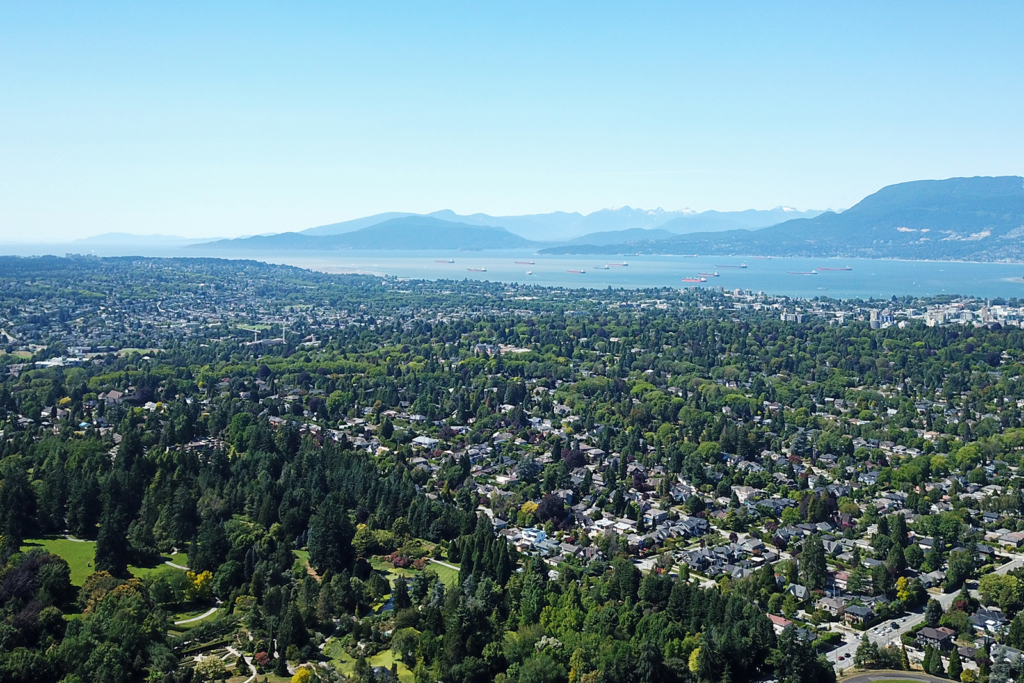
The pipe under your Shaughnessy street
The City publishes every sewer main it owns. Inside the Shaughnessy local area boundary there are 1,610 street main segments. 786 of them are still combined, meaning one pipe carrying sewage and rainwater together. That is 48.8% of the neighbourhood against 24.3% for Vancouver as a whole. Shaughnessy sits on about twice the citywide share.
Material tells the same story. 824 of those 1,610 segments are vitrified clay, 51.2% against 44.8% citywide. Of the 786 combined mains, 552 are clay. Clay cracks at the joint and roots find the crack, and the City itself names damage, age and tree roots as how groundwater and rain get into a sewer in the first place.
This is the part that costs money. The City has just separated 5.8 kilometres of combined sewer between West 26th Avenue and West 29th Avenue, replacing one pipe with two, one for rainwater and one for sewage. The new main carries a life expectancy of 100 years. As the City replaces a combined system, the properties on that street need separated systems too. In practice that means pulling the perimeter drain and the roof leaders off the sanitary line and putting them onto the new storm line. You are responsible for the sewer lines on your property up to where they meet the City’s connection, so that half of the job is yours.
The policy is not new. Council approved separating sanitary and storm sewers in the early 1970s, starting in the West End and Downtown. Shaughnessy is a long way down that list, which is exactly why the combined share here is still what it is. The provincial target is to end sewage overflows by 2050.

Big lots, long runs, and a lot of tree
Half the housing here predates 1960. The City’s own census summary puts it at 50.9% against 23.3% for Vancouver as a whole, and 64.6% of the dwellings are single detached houses against 14.6% citywide. Density is 6.6 dwellings per hectare where the city average is 24.8. Shaughnessy was drawn in 1909 by L.E. Davick and Frederick Gage Todd on lots running a fifth of an acre to an acre and a half, and in First Shaughnessy the by-law still caps site coverage at 35%.
Read those numbers as drainage and they say one thing. A Shaughnessy house has far more perimeter to drain and a far longer lateral out to the City main than a standard 33 foot lot. More pipe means more joints, more places for a root to get in, and a bigger bill when it goes.
Then there is what is growing over it. The City counts about 10,864 public trees inside Shaughnessy. 1,137 of them measure more than 76 cm across the trunk and 252 measure more than 100 cm. Norway maple leads at 756, American elm at 567, then Pissard plum, Kwanzan cherry, common horsechestnut, western red cedar, Douglas fir and London plane. Oak Street alone carries 2,093 of them, 204 of those over 76 cm. Angus Drive carries 587, Osler Street 396, Marguerite Street 269, The Crescent 170. Angus and Osler have a tree lined median on top of the boulevard trees.
We will not guess at what your drain tile is made of. What we do know is that half the City mains under these streets are still clay and half the houses went in before 1960. When we camera a perimeter drain in Shaughnessy we expect to find clay tile, and we usually do. On the other half we find ABS and a completely different conversation. That is the whole argument for looking first.
24/7 emergency dispatch
Drainage problem in Shaughnessy?
Ryan picks up. Live dispatch, and you get a real arrival window on the call. We camera the line before anybody quotes a number.
Shaughnessy drainage and plumbing FAQ
Odds are better than even. 786 of the 1,610 street main segments inside Shaughnessy are still combined, about 48.8%, against 24.3% for Vancouver as a whole. The City has been working through them, including 5.8 kilometres between West 26th and West 29th. We can tell you what is under your block before we come out.
Your property has to run a separated system too. As the City replaces a combined main with two pipes, the properties on that street need separated systems, which usually means getting the roof leaders and the foundation drain off the sanitary line and onto storm. We camera what you have, then tell you what has to move.
You are responsible for the lines on your property, up to where they meet the City’s sewer connection. A licensed contractor can clean, camera and renew the whole connection from the house out to that point. Anything inside the road right of way is the City’s.
On this housing stock it is normally the perimeter drain. Half the dwellings in Shaughnessy predate 1960 and the lots are big, so there is a lot of drain tile per house and a lot of joints. We camera the perimeter and show you the condition before we quote anything.
Usually, yes. The City names three renewal methods, open trenching, pipe bursting and pipe relining. On a First Shaughnessy lot the trenchless two are normally worth pricing first, and the City used trenchless on its own Memorial West job specifically to keep more than 20 mature trees. Where we do have to open ground we plan the cut and put it back properly.
There are about 10,864 City trees inside Shaughnessy and 1,137 of them are more than 76 cm across the trunk. Oak Street alone carries 2,093, Angus Drive 587, Osler Street 396. The City names tree roots as one of the ways groundwater and rain get into a sewer through cracks and holes. On those streets a camera is not optional.
In a pre war house that is usually original galvanized supply pipe. It corrodes from the inside and closes down to a fraction of its original bore, so flow drops everywhere at once rather than at one fixture. Rust coloured water is the other tell.
We give you a firm price after the camera inspection, and it does not change once digging starts. We will not quote a Shaughnessy lot off a phone call, because the runs here vary more than almost anywhere in the city. Lot sizes started at a fifth of an acre and went to an acre and a half, so the length of pipe is the number that moves.
No travel fee. Shaughnessy, South Granville, Kerrisdale, Oakridge, Fairview and the rest of the west side are all covered at the same rate as anywhere else we work.
All of Vancouver, plus Burnaby, New Westminster and the North Shore. The true neighbours here are Fairview to the north across West 16th, South Cambie across Oak, Kerrisdale and Oakridge across West 41st, and Arbutus Ridge across East Boulevard.
24/7 EMERGENCY DISPATCH
Water where it should not be?
Ryan picks up. Live dispatch, and you get a real arrival window on the call.