

Drainage and plumbing, Mount Pleasant
Drainage and Plumbing in Mount Pleasant Vancouver
Mount Pleasant is Vancouver’s first suburb. It runs from False Creek southeast and up the slope toward where Broadway, Kingsway and Main Street meet, and 42% of the land parcels here were built in 1920 or earlier.
The City has already separated most of the sewer in these streets. The century old half of the problem is the pipe on your side of the property line. We camera it before anybody quotes a number.
Signs worth acting on in Mount Pleasant
Whether you own a character house north of Broadway or a place on the plateau closer to 16th, these are the ones that get expensive if you leave them.
- A wet basement every fall, or after any heavy rain
- A sump pump that runs and runs and does not shut off
- Slow drains right through the house rather than at one fixture
- A toilet that gurgles when the sink drains
- A sewer smell in the basement or in a suite
- Water sitting in a window well after the rain has stopped
- Moss or a soft spot in the lawn on one side of the house only
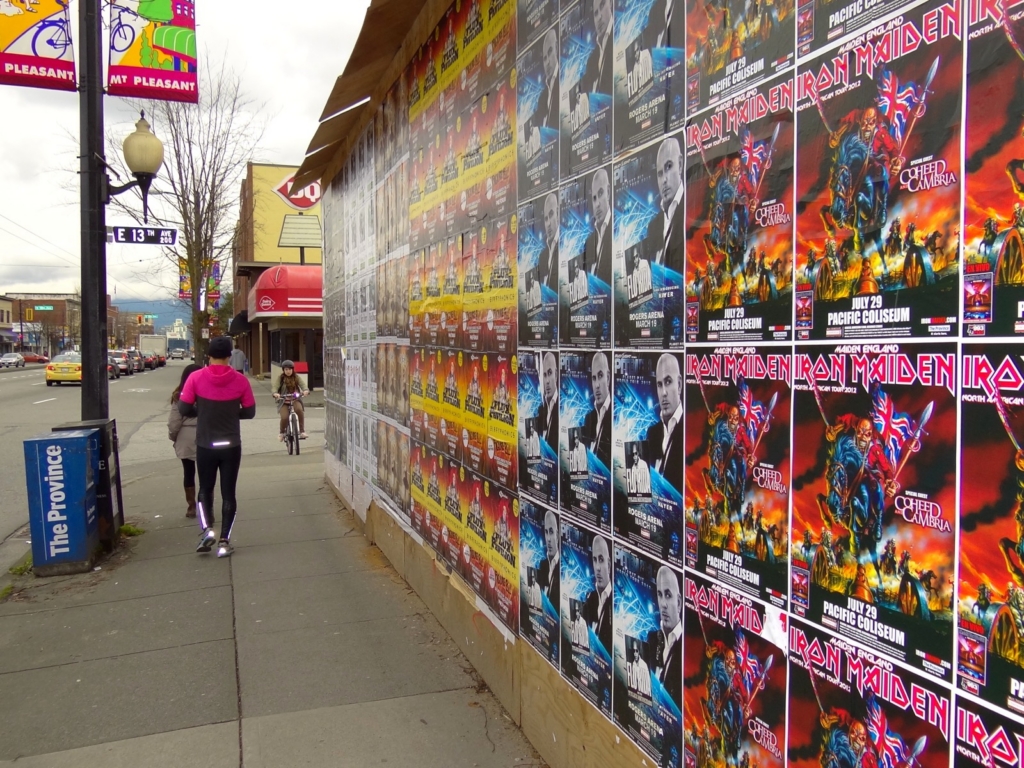
Old ground, old houses, and three buried creeks
Off the City’s 2023 tax roll there are 3,864 land parcels in Mount Pleasant and 3,644 carry a build year. 42.0% went up in 1920 or earlier. 51.2% predate 1940. The 1910s alone are 24.3% of the neighbourhood, close to a quarter of it built in one decade. RT-5, the character house zone, is the single most common zoning here at 1,006 parcels, and another 839 parcels are zoned industrial, which is a real feature of this neighbourhood and not of most others.
The ground falls about 50 m from the False Creek edge to 16th Avenue over roughly 1,770 m, an average grade near 2.8%, and all of it drains north. The north edge is not original ground. During the First World War the tidal flats of False Creek from Main Street to Clark Drive were filled to make room for two railway terminals and railyards, and the mouth of Brewery Creek was filled in with them.
Three creeks are buried under this neighbourhood. Brewery Creek ran into False Creek just north of 1st Avenue. China Creek cut a ravine across Broadway, and the two China Creek parks still carry the name. And a third runs under St. George Street.
That third one has a documented drainage record. The road and homes along St. George Street sit above a creek that historically emptied into False Creek. It still runs underground through pipes and culverts, and CBC reported it had not offered the community adequate drainage for at least a decade, often leading to street flooding and damage to the roadway. One resident described water pouring down the street and seeping into neighbours’ basements. The City’s answer was the St. George Rainway, a four block rain garden from East Broadway down to East 5th, built to drain 17,000 cubic metres a year off the roadway. In the October 2024 atmospheric river, when the City recorded up to 211 millimetres on Vancouver proper, the City’s green infrastructure lead said it performed beautifully.
Worth knowing if you own on that block: we checked the pipe. From Broadway to East 5th, St. George Street carries 45 storm segments and 40 sanitary, and 33 of those 40 sanitary segments are vitrified clay. The street is separated. It is also on clay.

The pipe under your Mount Pleasant street
There is about 122.6 km of sewer main under this neighbourhood, and the City publishes every segment of it. 13.1% of that length is still combined, which means one pipe carrying sewage and rainwater together. Citywide, combined mains are 24.3% of segments. Mount Pleasant sits at well under half the city rate.
What matters more is where the remnant is. North of 2nd Avenue the combined share of length is 0.0%. At Broadway it is 23.6%. Around 11th to 12th it is 32.6%. At 16th it is 29.8%. The slope down to False Creek is done. The plateau from Broadway south is not.
Material tells the same story. About 38% of the sewer main length here is vitrified clay, and of the combined mains specifically about 44% is clay. Clay is brittle, it cracks, and the City itself names damage, age and tree roots as how groundwater and rain get into a sewer in the first place.
This is your problem and not just the City’s. The City’s rule is plain: as it replaces combined systems with separated ones, properties will also need separated systems. That is tied to the Province’s goal of ending sewage overflows by 2050. In practice it means roof and foundation drains wrongly connected into the sanitary line have to come off. You are responsible for the sewer lines on your property up to where they meet the City’s connection, and a licensed plumber can clean and clear that whole run. Only the City can dig in its own right of way.
Above ground there are 1,854 catch basins in Mount Pleasant, and 3,806 water main segments under the streets, 29.8% of them still cast iron. That last number is supply pipe, not your drain, and the two get confused constantly.
What Vancouver customers say
Ryan was great! My landlord called him to fix my blocked kitchen sink. He showed up the same day (on a Sunday) and fixed the problem. He even cleaned the sink and dried up all the water that had leaked before he got there. And he was very careful coming in and out of the house so my cat wouldn’t get out. I’d definitely recommend him.
Ryan is INCREDIBLE. He has been responding to all of us (four houses and families!) affected by a sewage back up. This is all on Boxing Day and beyond, in terrible weather full of ice, cold and rain. He is so knowledgeable, and knew what was needed right away. Just the top of his field I am sure. As well as that, he is incredibly calm, respectful, kind and fair. I am truly amazed by this person's capacity and competence in combination with his noble, calm presence in the face of a real mess. Thank you Ryan, so very much!
I had very positive experience with Mamba Services, Ryan was amazing to work with and took care of my drain issues in no time. He arrived on time, was very professional and efficient in carrying out the work. What impressed me was how honest he was in recommending needed repair. He was very patient in explaining the different options. I will certainly call them for future projects.
Had an excellent experience. Ryan was fantastic, it was an after hours call late in the evening and he showed up exactly in the time frame he gave. Took care of the kitchen sink issue within minutes all systems were running like new. Pricing was extremely reasonable, Ryan was patient and explained everything to me while fixing my problem. I would highly recommend this company for any plumbing work.
Ryan was efficient, experienced, and knowledgeable. He was able to squeeze me into his schedule with short notice and wasted no time with my appointment. He arrived on site inspected the issue, and was quickly at work with resolving the problem. I am very pleased with his service and honesty. He provided recommendations that will help assist me in future occurrences.
24/7 emergency dispatch
Drainage problem in Mount Pleasant?
Ryan picks up. Live dispatch, and you get a real arrival window on the call. Camera first, then the number, and the footage is yours to keep.
Mount Pleasant drainage and plumbing FAQ
Depends which side of Broadway you are on. Across the neighbourhood 13.1% of sewer main length is still combined, against 24.3% of segments citywide. North of 2nd Avenue it is 0.0%. At Broadway it is 23.6%, around 11th to 12th it is 32.6%, and at 16th it is 29.8%. We can tell you what is under your block before we come out.
On a house of this age it is normally the perimeter drainage, but we do not guess at it. The camera goes in first and you watch the monitor with us. Groundwater with nowhere to go builds against the foundation, and the fix depends entirely on whether the pipe is blocked, bellied or broken.
The Province’s goal is to end sewage overflows by 2050. As the City replaces a combined main with a separated system, the properties on that street need separated systems too. In practice that usually means getting roof and foundation drains off the sanitary line.
You are responsible for the lines on your property up to where they meet the City’s connection. The City authorises a licensed plumber to clean and clear the full portion of the connection from the house to the main. Only the City or its agents can excavate or repair the City’s portion inside the road right of way.
The City’s own list of why a connection blocks starts with tree roots penetrating the pipe. What we can tell you about Mount Pleasant is the counts. There are 6,595 City trees in the neighbourhood and 856 of them are 60 cm or more through the trunk, and they are heavily concentrated south of Broadway, on E 10th, W 13th and E 11th. A camera settles what is actually in your line.
Because it is still down there. About 38% of the sewer main length under this neighbourhood is vitrified clay, and of the combined mains specifically about 44% is clay. Clay is more brittle than plastic, which leads to cracking and leakage. Once it cracks, roots find it.
Often, yes. The City lists three renewal methods: open trenching, pipe bursting and pipe relining. On these small older lots the two trenchless options are usually worth pricing first. Your contractor contacts the City for permits before the work starts and for the inspection after it is done, and we handle that.
Not on your side of the property line. The rainway is a four block rain garden from East Broadway to East 5th, built to take 17,000 cubic metres a year off the roadway and cut runoff into the sewer. We checked the pipe in that corridor: it is already separated, 45 storm segments and 40 sanitary, and 33 of those 40 sanitary segments are vitrified clay. So the street is separated and the street is on clay.
No travel surcharge. Mount Pleasant is central Vancouver and we are in it constantly, on the same pricing as anywhere else in the city.
All of Vancouver, plus Burnaby, New Westminster and the North Shore. The neighbourhoods that actually touch Mount Pleasant are Downtown, Fairview, Grandview-Woodland, Kensington-Cedar Cottage, Riley Park, South Cambie and Strathcona, and we work all of them.
24/7 EMERGENCY DISPATCH
Water where it should not be?
Ryan picks up. Live dispatch, and you get a real arrival window on the call.