
MAMBA DRAINAGE SERVICES
Leak Detection Vancouver
Water stain on the ceiling? Spike in the water bill with no obvious cause? Damp drywall behind a wall you can't see? We find hidden leaks without tearing the house apart.
Acoustic listening, thermal imaging, pressure-isolation testing. 24/7 emergency dispatch. (778) 961-0824.
Need Leak Detection in Vancouver?
A water stain on a ceiling can mean a leak twenty feet from where it’s showing. Water follows joists, sheathing, and drywall before it finally bleeds through and turns brown. By the time you see the stain, the actual leak source has been wet for 2-8 weeks – and the framing and insulation around it are saturated.
We find hidden leaks before they become demolition jobs. Our diagnostic toolkit: acoustic listening discs that pick up the high-frequency hiss of pressurized water escaping a pinhole, thermal imaging cameras (FLIR C5) that find the warm trail of hot-water lines under tile or hardwood and the cold trail of cold-water leaks, pressure-isolation manifolds that isolate sections of the supply system to pinpoint a failed run, moisture meters for behind-drywall confirmation, and inspection cameras for cabinet voids and access ports.
The goal: locate the leak to within 6 inches before any wall or floor opens. Most diagnostics finish in 60-90 minutes, with a written report and photos. We give you the bracket on the phone, confirm it on arrival, and only widen the scope after you’ve seen the issue on the meter or imaging.
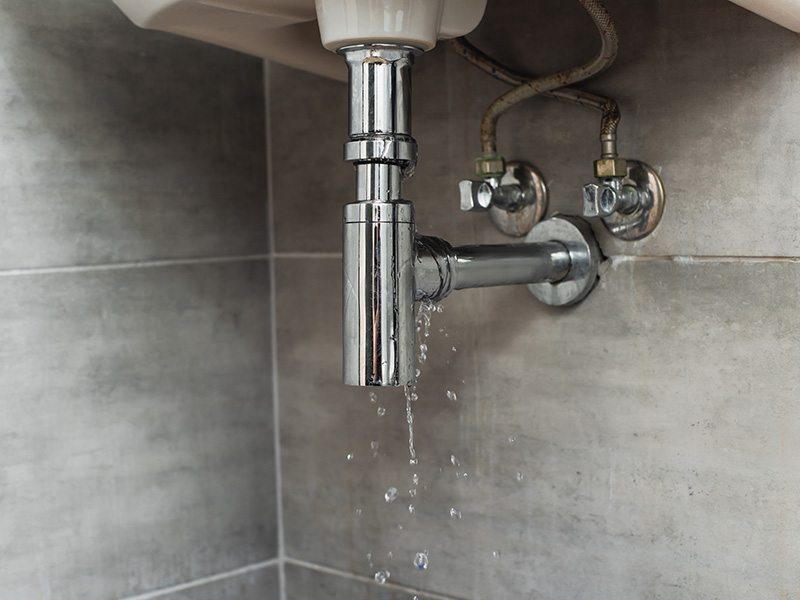
Common Vancouver leak patterns: pinhole copper supply leaks in 1970s-1990s homes (caused by aggressive water chemistry plus electrical bonding issues), failed brass fittings on Poly B supply lines from 1978-1995 builds (whole-house leak risk – see our pipe replacement page), slab leaks in Yaletown and downtown condos with in-slab heating loops, drain leaks under sinks (pull-down sprayer hoses, P-trap nuts, garburator flanges – see our faucet and garburator pages), and exterior wall leaks where Pacific weather drives water past failing caulk.
Standard arrival window: 30-60 minutes inside Vancouver and Burnaby for emergencies. 24/7 dispatch for active leaks pouring water. Phones answered live at (778) 961-0824.
Acoustic, Thermal, and Pressure-Isolation Detection
Acoustic detection picks up the high-frequency hiss of pressurized water escaping through a pinhole. We use ground microphones (for slab leaks) and contact discs (for wall leaks) that filter out ambient noise and amplify the leak signature. Most acoustic finds are accurate to within 4-6 inches. Works best on supply-side leaks (40-80 PSI water actively pushing through a hole) and harder on drain leaks (no pressure, gravity flow only).
Thermal imaging finds the warm trail of hot-water lines under tile, hardwood, or carpet – or the cold trail of cold-water leaks against ambient surroundings. Best for slab leaks in downtown Olympic Village and Yaletown condos with in-slab radiant heat, and behind-wall leaks where water has wet the drywall enough to show temperature contrast. We use FLIR C5 imagers (320×240 resolution, 19mK thermal sensitivity).
Pressure-isolation testing isolates sections of the supply system to pinpoint which section is failing. We close manifold valves one at a time and watch the static pressure gauge – the section that’s bleeding pressure is the section with the leak. Diagnostic accuracy: identifies the failed branch within one or two valve operations. Best for whole-house leak puzzles where you’ve ruled out the obvious fixtures.
For drain leaks (no pressure), we use a smoke test: introduce smoke into the drain system through a cleanout and watch where it escapes. Smoke shows up at the failed seal, broken joint, or cracked pipe section. Useful for sewer-gas complaints too – tells you whether the issue is a dry trap or an actual failure.
Every diagnostic visit ends with a written report (location of leak, suspected cause, recommended repair scope, photos/thermal images attached) emailed within 4 hours. Useful for insurance claims, future buyers, or shopping repair quotes.
Slab Leaks, Behind-Wall Leaks, and Insurance Documentation
Slab leaks are the most expensive residential leak failure. Most Vancouver houses with slab-on-grade construction (downtown condos, some 1960s-1980s East Van rancher-style homes, certain Burnaby Heights builds) have copper or PEX supply lines embedded in or below the concrete slab. When one fails, water bleeds into the slab and either pushes up through floor coverings or seeps down into the foundation drainage. By the time you see a wet spot, the pipe has been leaking for weeks.
We locate slab leaks with thermal imaging (warmer floor over the hot-water line trail) plus acoustic confirmation. Once located, repair options: pinpoint chip-out (cut through 12″x12″ of slab to expose and repair the pipe section, $1,800-$4,500), reroute (abandon the failed slab section and run new pipe overhead or through walls, $2,400-$5,800), or for whole-house issues, full repipe (see pipe replacement). We diagnose first, then quote.
Behind-wall leaks are common in pre-1980 East Van homes with galvanized supply pipe that’s pinholing from the inside out. Symptoms: warm spot on drywall, paint bubbling, mildew smell, water staining at a wall-floor joint. We locate with acoustic plus thermal, cut a 6″x6″ inspection window in the right spot (not 6 feet from the actual leak like an unlocated guess would), repair the pipe section, dry the cavity with a moisture meter to confirm, patch and paint-match the drywall. Most behind-wall leak repairs finish in 4-6 hours.
Insurance documentation is included on every leak diagnosis. Timestamped photos, thermal imaging stills, written cause-and-condition report formatted for adjustors. We’ve worked with adjustors from Aviva, Intact, BCAA, Wawanesa, Square One, and TD Insurance. Most homeowner policies cover sudden-and-accidental water damage but not slow long-term deterioration – the documentation helps prove the failure mode and timing.
Leak Detection Services We Offer
Acoustic Leak Detection
Ground microphones plus contact discs for supply-side leaks. Filters ambient noise, locates leaks to within 4-6 inches. Best for 40-80 PSI supply leaks behind walls and under slabs. $189-$329 standalone.
Thermal Imaging
FLIR C5 imager (320×240, 19mK sensitivity). Finds hot-water leak trails under tile / hardwood / carpet, and cold-water leaks against ambient. Best for slab leaks, in-floor radiant, and wet drywall behind walls. $189-$329 standalone.
Pressure-Isolation Testing
Manifold valves close section by section, static pressure gauge identifies the failing branch. Best for whole-house leak puzzles. $229-$389.
Slab Leak Detection & Location
Combined thermal plus acoustic plus pressure-isolation for slab leaks in downtown condos and 1960s-1980s slab-on-grade homes. Includes paint-marking of leak location above the floor. $289-$489 location only.
Behind-Wall Leak Detection & Repair
Locate, cut 6″x6″ inspection window, repair pipe, dry cavity, patch drywall and paint-match. $389-$1,489 depending on access and pipe type.
Insurance Documentation Package
Timestamped photos, thermal stills, written cause-and-condition report formatted for adjustors. Included free on every leak diagnostic visit. Standalone documentation for existing claims: $189-$289.
Why Vancouver Homeowners Choose Mamba for Leak Detection
Locate Before You Demolish
We find the leak to within 6 inches before any wall or floor opens. Saves you from cutting open three walls to find the one that’s actually wet. Critical for finished basements, tile bathrooms, and heritage hardwood floors.
Multiple Detection Methods
Acoustic, thermal, pressure-isolation, smoke, moisture meter, inspection camera. We don’t rely on one tool – we cross-confirm every leak find with at least two methods so we’re not opening the wrong wall.
Insurance-Ready Documentation
Adjustor-formatted reports with timestamped photos and thermal imaging stills. We’ve worked with Aviva, Intact, BCAA, Wawanesa, Square One, TD. Most claims approved within 14 days when properly documented.
Decoupled from Repair Quote
Many plumbers run a free “diagnostic” and pressure you into their repair quote on the spot. We charge a flat detection fee, deliver the report, and let you decide. Want a second opinion on the repair? You have the documentation to share.
Vancouver Leak Detection Price Ranges
Acoustic leak detection (single-point): $189-$329.
Thermal imaging scan (single bathroom / kitchen / room): $189-$329.
Full-house thermal + acoustic survey: $389-$589.
Pressure-isolation testing (whole-house supply system): $229-$389.
Slab leak location: $289-$489 standalone (combined methods).
Slab leak chip-out repair (single section): $1,800-$4,500.
Slab leak reroute (abandon failed section, new pipe overhead): $2,400-$5,800.
Behind-wall leak detection + repair (single section, no demolition above 6″x6″ cut): $389-$1,489.
Drywall patch + paint match included: Yes.
Smoke test for drain leaks / sewer-gas: $189-$289.
Insurance documentation package (standalone): $189-$289.
Diagnostic credited to repair if you proceed with Mamba.
Emergency / after-hours / stat holiday call-out: $99 premium.
Water bill jumped $80/month with no obvious cause? Stain on the ceiling growing? Find it before it costs $20,000 in framing repair.
9 Leak Detection Tips for Vancouver Homeowners
- Watch your water meter when nothing is running. Shut off all fixtures and appliances, check the meter, wait 30 minutes, check again. Any movement equals an active leak. Free 5-minute test – we use it on every diagnostic.
- Track your monthly water bill year-over-year. City of Vancouver bills quarterly. A sudden spike of 20%+ that you can’t explain by usage changes equals a leak somewhere. Catch it early – water bills compound slow leaks.
- Touch the drywall low on every bathroom wall once a quarter. Damp drywall near the floor of a bathroom equals a leaky supply line, toilet wax seal, or pan failure. 30-second check, catches most slow leaks before they ruin framing.
- Sniff for mildew along walls in the basement. Musty smell on a basement wall in East Van homes often means slow water infiltration through a leak or failing drain tile. Trust your nose – it’s earlier than any visible sign.
- Watch the ceiling below a bathroom. Brown spots, sagging drywall, paint bubbling – all warnings of a slow leak above. The leak has been active for weeks by the time it shows. Fast action saves the joists.
- If you have a slab-on-grade home, check for warm spots in the floor. Slab leaks on hot-water lines warm the floor above the leak. If you feel a warm spot in tile or hardwood with no obvious heat source, schedule a thermal scan immediately.
- Keep a moisture meter handy. $30 at any hardware store. Touch it to suspicious drywall – reads moisture content through the surface. Confirms suspicions without opening walls.
- Document the failure timing for insurance. Photo the leak, photo the meter, write down the date and time. Insurance adjustors weight sudden-and-accidental events differently than long-term deterioration. Documentation matters.
- Set water pressure to 65-70 PSI house-wide. High City of Vancouver pressure (80-110 PSI in some neighborhoods) drives leaks faster and accelerates pinhole formation. A PRV install reduces leak risk significantly.
Frequently Asked Questions
Three primary methods: acoustic listening (microphones pick up the high-frequency hiss of pressurized water escaping), thermal imaging (finds temperature contrast where wet drywall is cooler than ambient or hot-water leaks warm the floor), and pressure-isolation testing (isolate sections of the supply system to identify which branch is bleeding). Usually we cross-confirm with at least two methods.
Within 4-6 inches typically. Acoustic plus thermal cross-confirmation tightens to 2-3 inches. We mark the location with painter’s tape and laser-pointer before any wall opens, so the access cut is right on top of the issue.
Yes – combined thermal plus acoustic plus pressure-isolation. Most common in downtown Olympic Village and Yaletown condos with in-slab radiant heat, and some 1960s-1980s slab-on-grade homes. We locate the leak, then quote repair options (chip-out vs. reroute vs. repipe).
Depends on the policy and the failure mode. Sudden-and-accidental water damage (e.g., a copper supply line that suddenly pinholes) is typically covered. Slow long-term deterioration (gradual failure of an old pipe) is often not. Our documentation report helps prove the timing and cause to your adjustor. We’ve worked with Aviva, Intact, BCAA, Wawanesa, Square One, TD.
60-90 minutes for a typical single-leak diagnostic. Whole-house leak puzzle (you’ve got high water bills with no obvious source): 2-3 hours. Written report and photos emailed within 4 hours of leaving the property.
If we can’t locate a leak after a full diagnostic, you pay only $129 trip charge (covers the visit). Almost never happens – if water is leaving the supply system, our methods find where. If it’s a drain or condensation issue (which we’ll identify), the diagnostic still applies but the recommended repair will be different.
Yes – locate, cut a 6″x6″ inspection window in the right spot, repair the pipe section, dry the cavity with a moisture meter, patch drywall and paint-match. Most behind-wall leak repairs finish in 4-6 hours. $389-$1,489 depending on access and pipe type.
Smoke test – introduce smoke into the drain system through a cleanout and watch where it escapes. Smoke shows up at the failed seal or broken joint. Useful for sewer-gas complaints too. $189-$289.
Yes – included free on every leak diagnostic visit. Adjustor-formatted report with timestamped photos and thermal imaging stills. Standalone documentation for existing claims: $189-$289.
1-year workmanship warranty on Mamba labour. Pipe materials carry manufacturer warranty (Type-L copper lifetime, PEX-A 25-year, brass fittings lifetime). Documentation emailed at project completion.
Yes – we work on pre-1970 galvanized supply pipe in Strathcona and Hastings-Sunrise regularly. Acoustic detection works well on galvanized – the pinholes leak at a recognizable frequency. We can also locate Poly B fitting failures by acoustic across the 1980s Burnaby and Surrey housing stock – see our pipe replacement page for the long-term fix.


VIDEO GALLERY
THE UTMOST QUALITY AND PROFESSIONALISM, 24/7
QUALITY IS OUR GAME
Mamba Drainage strives to deliver excellence one client at a time by upholding our core values throughout our services. We believe honest and meaningful work creates and sustains the foundation for exceptional client relations.