How to Prevent Drainage Problems in a Vancouver Home
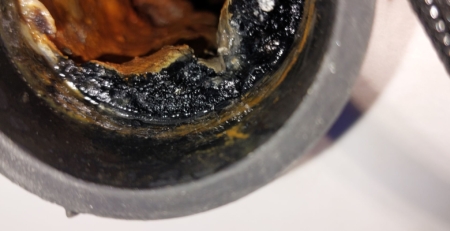
The video below is from one of our own jobs. It shows a whole lot of roots, and root infiltration is the single most common thing our camera finds in Vancouver lines. Most drainage problems can be caught early, and preventing them starts with knowing which part of the pipe is yours.
Half of the pipe is yours
The City of Vancouver is clear about where its job ends. As a property owner, you are responsible for maintaining the sewer lines on your property, up to where they meet the City’s sewer connection. The line under your yard, from the house out to the property line, is yours to look after, and nobody inspects it for you. The City explains the split here.
What breaks a line here
The City names the causes of trouble in private sewer lines: holes or cracks from damage, age or tree roots, and roof or foundation drains that were tied into the sanitary line when they should have gone to storm. Roots are the one we see most. They find a joint, open it and grow into the pipe, and once they are in, they keep coming back.
The warning signs the City lists
The City’s guide to leaks, floods and sewage points to the same early signs we get called about.
- Basement fixtures that drain slowly or make bubbling sounds
- A basement toilet, floor drain, shower, tub or sink that overflows
- Water seeping through the basement walls or foundation and pooling on the floor
Slow drains and gurgling come first. If you are hearing them, the line is already partly blocked, and this is the cheapest point to find out why. The full City guide is here.
Find your clean-out before you need it
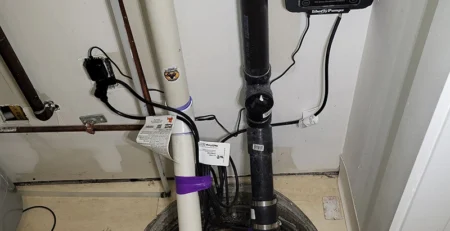
A clean-out is a capped pipe that gives access to the sewer line. When a backup needs the City crew, the City asks whether you have a sump or a clean-out, and without one you may have to remove your basement toilet so the crew can clear the line. Know where yours is before the night you need it.
Who pays depends on the cause
For a sewer blockage or backup, the City says responsibility for the repair costs depends on what caused the problem, and its crew is there to clear the blockage only. That is why footage is worth having. A camera inspection shows whether you are looking at roots on your side, a broken section or something else, and it gives you a record to keep.
Roof water and the separation program
Parts of Vancouver still run on combined sewers, where rainwater and sewage share one pipe, and in heavy rain that pipe can overflow. The City is working toward the Province’s goal of eliminating sewage overflows by 2050, and private connections are typically separated when a property redevelops or goes through a major renovation. If a big renovation is on your list, that is the time to sort out your connection and make sure your roof leaders and foundation drains go where they should. The City’s separation page has the detail.
Fix it once
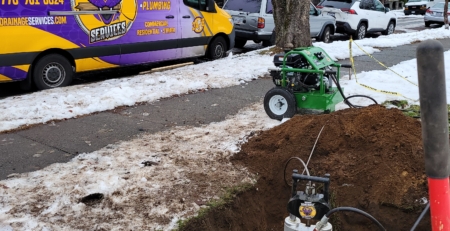
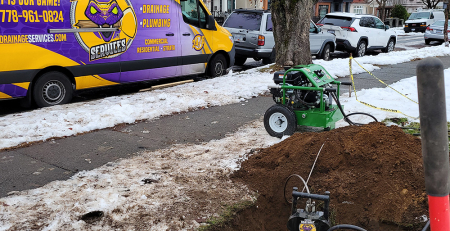
The City describes two ways to renew a private line: relining the pipe to extend its life, or replacing it, for example with pipe that resists tree roots. Replacement is done by open trenching or by pipe bursting in place, and your contractor gets the permits and has the City inspect the finished work. We camera the line first, show you the footage, and quote the fix off what is actually in the pipe. Cutting the same roots out of the same joint every year costs you every year. Replacing the bad section, through sewer line replacement or trenchless repair, is how it stops.
Mamba Drainage Services is open 24 hours. Call 778-961-0824 or fill out our contact form.